
What every article about Carolyn Bessette-Kennedy's style is missing: Nuance
Why I will die on the hill that CBK had range, duality and more fun with clothes than people give her credit for

I received 20+ brand emails in the last week alone with her name in the subject line. Her vintage 1996 Prada coat just sold for $192,000 at auction (not a typo). Google searches for “Carolyn Bessette-Kennedy style” are up 300% since January. Every fashion newsletter, every TikTok, every social media thread is dissecting her wardrobe, her choices, her “effortless minimalism.”
The obsession is real. And it totally checks out. There is nothing wrong with being inspired by someone whose style moves you. That is the whole point of iconic dressing - it sparks something in other people.
Everyone has a CBK hot take right now. But here is what the current discourse is missing: nuance.
The hot takes have flattened Carolyn Bessette-Kennedy into a minimalist icon with a strict uniform. Clean lines. Neutral colours. Simple cuts. A predictable formula anyone can replicate with the right pieces.
But that’s not what made her style remarkable. And it’s not actually the full picture of what she wore or who she was.
The truth is more interesting, more complex, and more useful than the narrative being sold right now. Because once you understand the nuance, you stop trying to emulate her wardrobe and start understanding the principles that made it truly work.
THE CALVIN KLEIN YEARS SHAPED HER (BUT DID NOT DEFINE HER)
It is worth calling out that she worked at Calvin Klein in the 90s (the ultimate flex). Calvin Klein’s aesthetic at that time was strict minimalism. Barely-there makeup, restrained palettes, understatement as luxury. Her blonde hair, natural, thick, and slightly wavy, was intentionally undone. Not overly styled or perfectly blown out, reminiscent of the Olsen twins’ signature tousled hair today.
This was her professional environment for years, so naturally it influenced her personal style. She was immersed in that world, absorbing those codes and learning that language. But she was not limited by it.
MINIMALISM WAS NOT THE WHOLE PICTURE
Carolyn was not exclusively minimal, nor was she predictable.
Yes, she often sported all-black ensembles, slip dresses, tailored black trousers and crisp white shirts. But the context here is important; in the 90s, fashion was about excess. Versace. Gucci logomania. Supermodels in body-con everything dripping in visible luxury. “More is more” was the prevailing aesthetic. Tom Ford’s Gucci. Donatella’s Versace. Fashion as spectacle.
Against that backdrop, CBK’s restraint felt radical. She was a counterpoint.
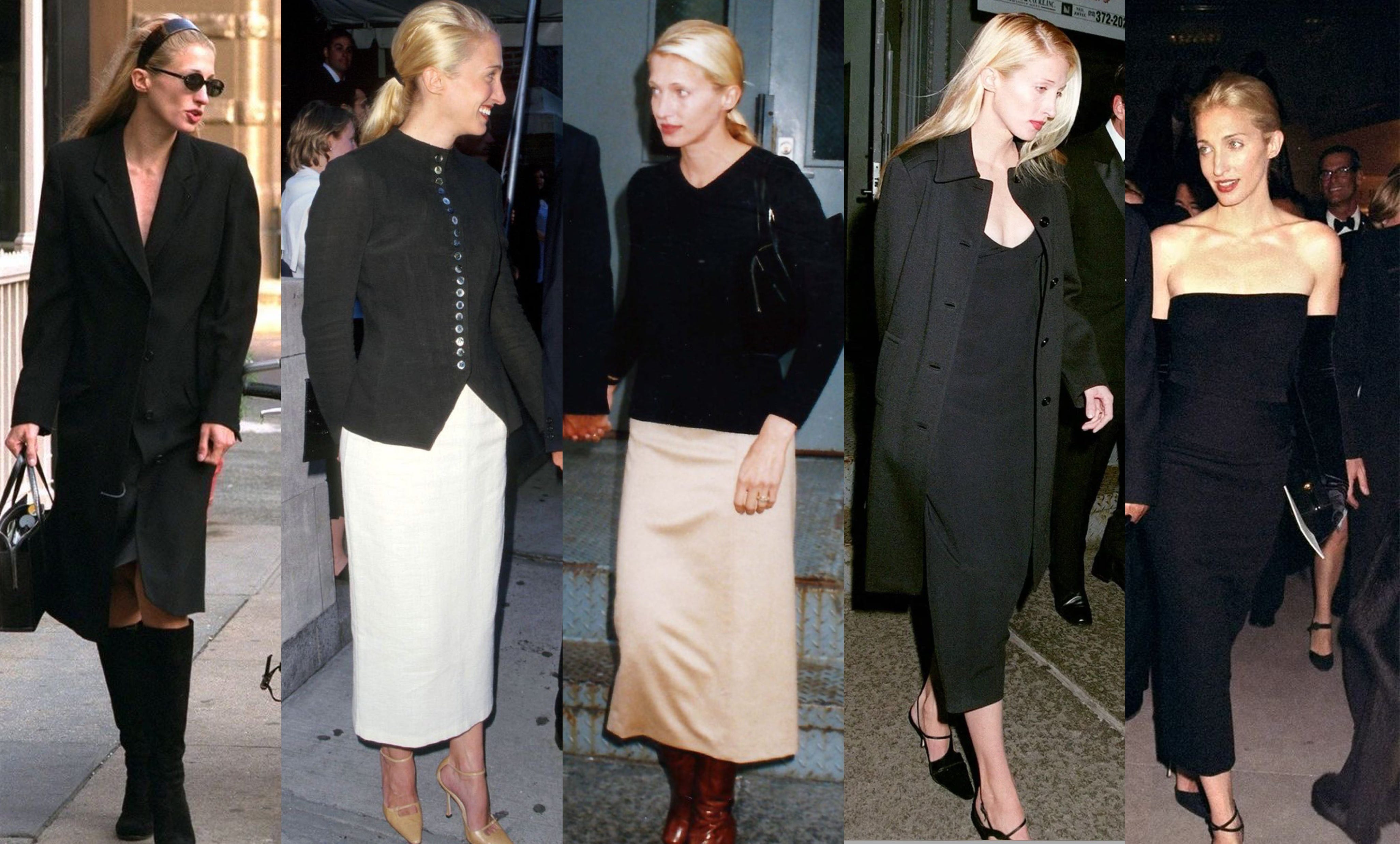
However, this was not the entirety of her taste. She also wore:
- Yohji Yamamoto (avant-garde, sculptural, deconstructed)
- Bold prints and unexpected patterns
- Statement coats in bright colours
- Oversized blazers in unconventional cuts
She was not afraid of playing with shape and volume, wearing unusual silhouettes, things that felt almost architectural - choices that rejected conventional femininity for a different kind of elegance.
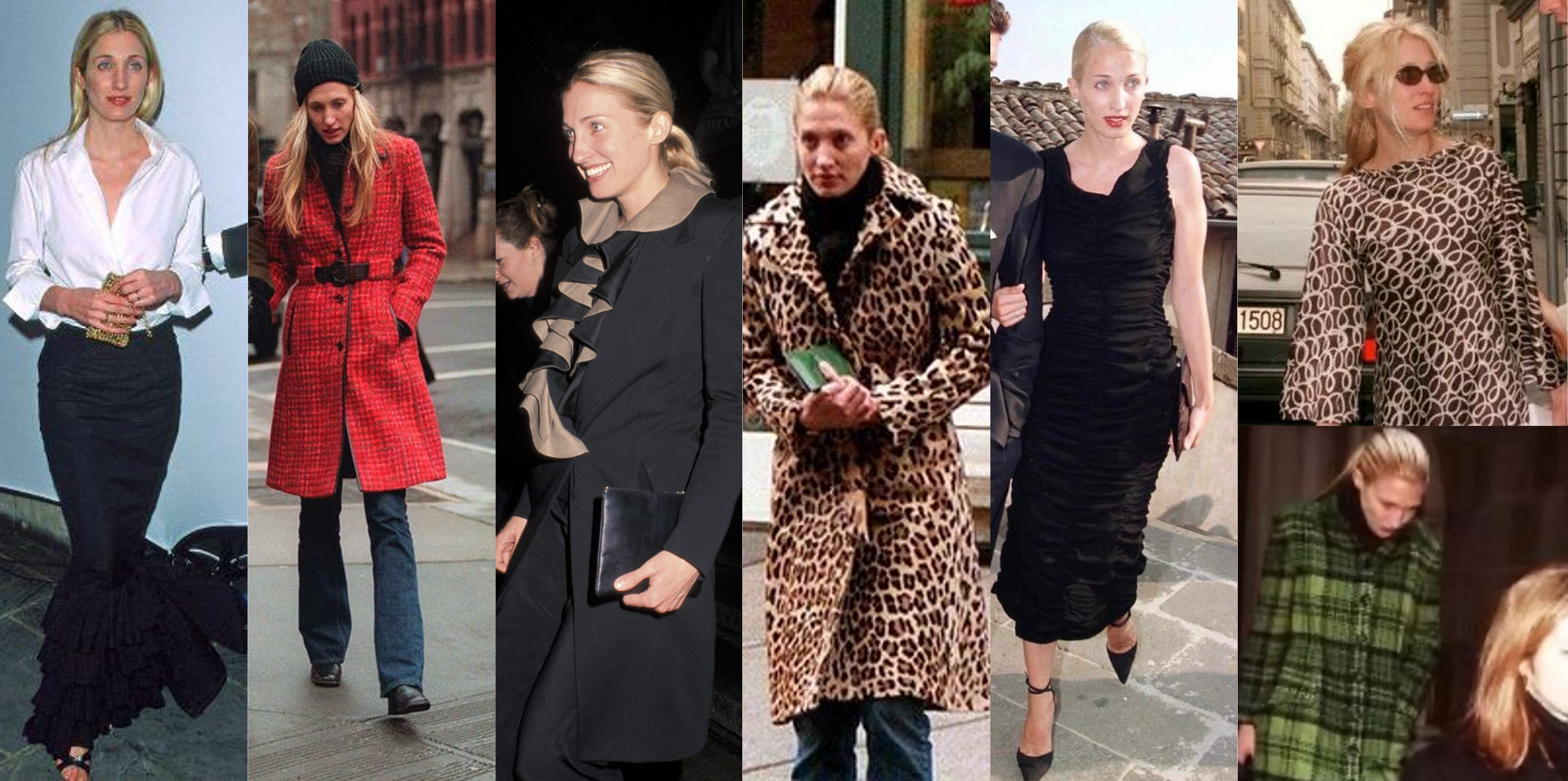
The minimalism narrative erases this. It flattens her into someone safe, someone easy to categorise, and someone whose style can be reduced to a shopping list of neutral basics.
But fashion media oversimplifies. Icons are never one-note.
Let’s be real, she rarely wore jewellery, often skipped socks, and her palette leaned neutral. But reducing her to “just a minimalist” erases the range and experimentation that also existed. The point is that putting style into rigid boxes means we miss the full picture and reduce people to aesthetic trends that are easier to sell.
Archetypes can be great reference points (minimalism, maximalism, masculine, feminine) but people are not one-dimensional. CBK could be minimal and experimental. Classic and avant-garde. Understated and bold. Predictable and surprising.
That duality, that refusal to be put in a box, is what made her interesting. And it is what people miss when they try to recreate her style by buying a pair of loafers and a headband and calling it done.
IT WORKED BECAUSE IT WORKED FOR HER
Despite the prevailing misconception, her style was not universal. It was actually specific. Calibrated to her body, her background, and her actual life.
Carolyn was approx 5’10” - tall, with long limbs and broad shoulders. Through her role at Calvin Klein, she developed deep fluency in how clothing photographs, how proportions read and how to present an image. Most importantly, she understood her frame.
Wide-leg cuts balanced her height and shoulders without overwhelming her frame. Oversized coats and blazers worked because she had the stature to carry them. Slip dresses skimmed her athletic build in a way that emphasised her proportions without clinging or adding bulk.
If you are 5’3” and petite (like me) her wardrobe will not work exactly the same way on you. If you have a different build, trying to dress like her might feel off. So, the lesson is not to copy her pieces. The lesson is to understand your own proportions the way she understood hers, and build a wardrobe around what actually works for your body.
HER ESSENCE WAS UNIQUE
Carolyn grew up comfortably upper-middle class in Greenwich, Connecticut. When she married JFK Jr., she entered one of America's most famous families. Whether instinctive or learned, she understood old money codes and navigated elite society with fluency. Her style broadly reflected that: restraint, social discretion, understated wealth. It was cultural literacy she either absorbed or cultivated. And that made it more interesting, not less.
People who knew her described her as lively and energetic in private, and as reserved and guarded publicly. She was not shy in the traditional sense, but she was deeply uncomfortable with media attention. She was actively trying to avoid paparazzi. Neutrals blend in. No logos meant no brand associations (she once even asked Prada to remove their logo from a piece she purchased). Perhaps we would have been more playful expression without such intense scrutiny. But crucially, her strategy mirrored her identity.
The aesthetic served a practical purpose that aligned with who she truly was. Function and essence working together. That is what made it feel so authentic. These paradoxes made her magnetic - not in a loud or performative way, but quietly. Her allure was confident restraint, which made her enigmatic and compelling. Her style reflected that tension.
SHE HAD A FRAMEWORK
CBK had a framework, but it was not a uniform. It was a set of principles to anchor her style.
She understood her proportions, so she knew which cuts to prioritise.
She understood her aesthetic references, which anchored her: Yamamoto for avant-garde restraint, Prada for clean modernity, Jil Sander for minimalist rigor, Calvin Klein for American ease.
She understood her filter, so she knew what to say no to: logos, trends, anything overtly sexy or attention-seeking, anything that felt like it was trying too hard.
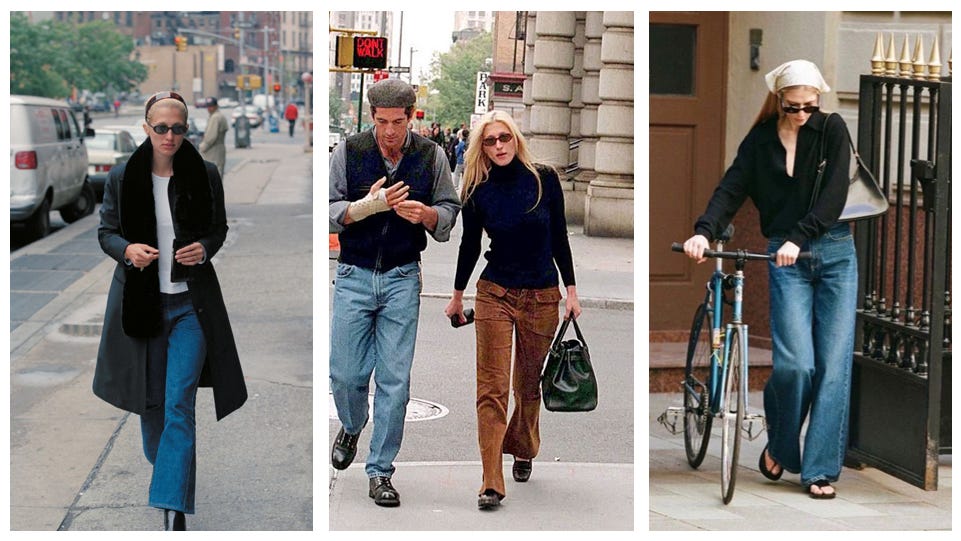
That framework allowed her to move fluidly from a T-shirt and jeans to a full-length leopard coat without ever looking inconsistent. The pieces could change, even surprise, but the architecture beneath them remained the same. What read as effortlessness was, in fact, discipline - a clarity about who she was and what belonged on her.
Fundamentally, she understood what worked, and she stuck to those principles even as she varied the execution. That is what a good framework does; it provides structure, but it is flexible enough to evolve, to accommodate mood, to reflect the full range of who you are.
A personal framework isn’t about restriction - it’s about refinement. When you know what works for you, you remove guesswork. Decision fatigue fades. Trends become inspirational rather than directive.
Paradoxically, structure creates freedom.
SHE WAS NOT PRECIOUS ABOUT HER CLOTHES
One final detail that often gets lost: she was not precious about her wardrobe.
There are photos of her in visibly worn-in pieces. Repeated outfits. Her beaten up Birkin. <3 She was not treating her wardrobe like a museum collection. She WORE things. She loved them and lived in them. She was not concerned with curating a perfect, pristine image (we’ve all seen those paparazzi pictures from the infamous fight in the park). That ease, that lack of preciousness, is part of what made it all look so effortless.
BUILD YOUR OWN
Instead of asking “what would CBK wear?”
Start asking: What do I want my style to communicate? What reflects my energy? What works for my proportions? What inspires me? What are my references and anchors? What is my formula? What am I willing to say no to?
And perhaps most importantly: play! Experiment. Refine.
We can learn from CBK that duality and nuance do not dilute identity - they enrich it.
That is how you build style that lasts. Not by imitating hers. Not by flattening yourself into a single aesthetic (”clean girl”, “old money”, “mob wife”). But by building your own formula with the same level of intention, the same refusal to be reduced, and the same commitment to expressing the full range of who you are.
Her style was hers. Yours should be yours.
THIS!! Such an accurate and beautifully written description of the real CBK and her style!
You make some very good points here, my favorite being the advice to follow CBK's example by finding your own style, not by copying hers. But I somewhat disagree with the point about her style being unusual because the 90s were all about excess. The early 90s were, yes. Supermodels, Versace, ect. But Minimalism was very much a thing as a reaction to that. Not just Calvin Klein, but Jil Sander, Helmut Lang and Armani were hugely popular in the 90s. And Carolyn Bessette was one of the people who helped the trend along, by wearing Calvin Klein and looking great in it. The influence of this style was so big that in my 90s high schools it was a fashion faux pas to wear bright colours, a lot of jewellery, nail polish or, heaven forbid, pink! And this was long before social media. Ultimately, the fashion swings back and forth between minimalist and maximalist. It's funny to see all the 90s fashions come back, including the obsession with CBK's style.